
















:max_bytes(150000):strip_icc():format(webp)/Group1805-3b9f749674f0434184ef75020339bd35.jpg)
Cryptocurrencies are digital assets created using blockchain technology.
What Is Cryptocurrency?
A cryptocurrency is a digital or virtual currency secured by cryptography, which makes it nearly impossible to counterfeit or double-spend. Cryptocurrencies exist on decentralized networks that utilize blockchain technology—a distributed ledger secured by a network of computers.
A defining feature of cryptocurrencies is that they are generally not issued by any central or governing authority. However, laws and policies set by the U.S. Securities and Exchange Commission (SEC) have placed policies and standards that must be abided by institutions, such as crypto exchanges and online brokerage firms that offer cryptocurrency.1
Key Takeaways
- A cryptocurrency is a form of digital asset based on a blockchain network that is distributed across a large number of computers. This decentralized structure allows them to exist outside the control of governments and central authorities.
- Government agencies such as the SEC routinely regulate cryptocurrency, setting laws and regulations for crypto exchanges and online brokerage firms to follow.
- Some experts believe blockchain and related technologies will disrupt many industries, including finance and law.
- The advantages of cryptocurrencies include cheaper and faster money transfers, as well as the possibility of capital gains.
- The disadvantages of cryptocurrencies include their price volatility, high energy consumption for mining activities, and use in criminal activities.
:max_bytes(150000):strip_icc():format(webp)/TermDefinitions_crypto_final-940e93a6cb5341999a5d735fbf04fbfe.png)
Investopedia / Tara Anand
Understanding Cryptocurrency
Cryptocurrencies are digital currencies underpinned by cryptographic systems. They enable secure online payments without the use of third-party intermediaries. “Crypto” refers to the various encryption algorithms and cryptographic techniques that safeguard these entries, such as elliptical curve encryption, public-private key pairs, and hashing functions.
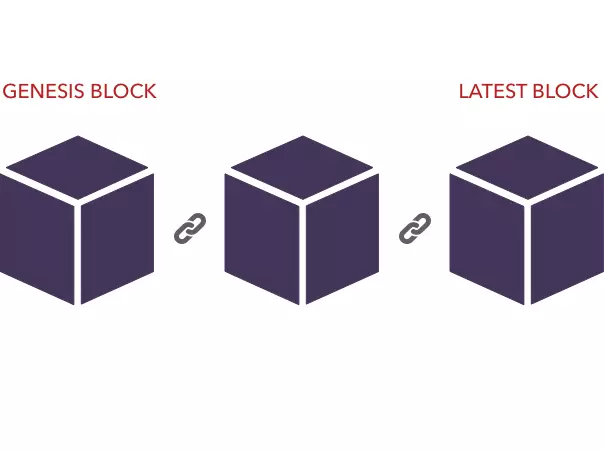
Blockchain technology is central to the appeal and functionality of Bitcoin and other cryptocurrencies. As its name indicates, a blockchain is essentially a set of connected blocks of information on an online ledger. Each block contains a set of transactions that have been verified by validators on a network.
This network-wide validation makes it nearly impossible to forge transactions. The contents of the online ledger must be agreed upon by a network of individual nodes, or computers that maintain the ledger.2
Experts say that blockchain technology can serve multiple industries, supply chains, and processes, such as online voting and crowdfunding. For example, financial institutions such as JPMorgan Chase & Co. (JPM) have developed and utilized blockchain technology to reduce transaction costs by streamlining payment processing.3
Types of Cryptocurrency
Many cryptocurrencies were created to facilitate work done on the blockchain they are built on. For example, Ethereum’s native digital coin, ether (ETH), was designed to be used as payment for validating transactions and opening blocks. When the blockchain transitioned to proof-of-stake in September 2022, ether inherited an additional duty as the blockchain’s staking mechanism.4 The XRP Ledger’s native cryptocurrency, XRP, is designed for financial institutions to facilitate transfers between different geographies.5
Because so many cryptocurrencies are on the market, it’s important to understand the different types. Knowing whether the coin you’re looking at has a purpose can help you decide whether it is worth investing in—a cryptocurrency with a purpose is likely to be less risky than one that doesn’t have a use.
Most of the time, when you hear about cryptocurrency types, you hear the coin’s name. However, coin names differ from coin types. Here are some of the types you’ll find, with some of the names of tokens in that category:
- Utility: XRP and ETH are two examples of utility tokens. They serve specific functions on their respective blockchains.
- Transactional: Tokens designed to be used as a payment method. Bitcoin is the most well-known of these.6
- Governance: These tokens represent voting or other rights on a blockchain, such as Uniswap.7
- Platform: These tokens support decentralized applications, also known as dApps, which are built on a blockchain, such as Solana.
- Security tokens (asset-backed tokens): Tokens representing ownership of an asset, such as a stock that has been tokenized (value transferred to the blockchain). MS Token is an example of a securitized token. If you can find one of these for sale, you can gain partial ownership of the Millennium Sapphire.8
If you find a cryptocurrency that doesn’t fall into one of these categories, you’ve likely discovered a new category or something that needs further investigation to ensure its legitimacy.
How to Buy Cryptocurrency
If you want to use cryptocurrency to buy products and services, you will need to visit a cryptocurrency exchange. These are businesses that allow you to buy or sell cryptocurrencies from other users at the current market price, similar to a stock. After buying the coins, you will need to transfer them to a crypto wallet or use a third-party service like Coinbase to store your coins.
If you only want to buy cryptocurrency as an investment, you may be able to do so through your online brokerage. For example, Robinhood, which we found to be the best broker for cryptocurrency trading, allows users to invest in Bitcoin and other cryptocurrencies. In addition, several crypto ETFs, such as Spot Bitcoin and Ethereum ETFs, provide exposure to the crypto asset class without requiring investors to maintain their wallets. For instance, investors may choose to hold Bitcoin ETF shares. The SEC has also approved the listing and trading of Ether spot shares.9
Is Cryptocurrency Legal?
Fiat currencies derive their authority from the government or monetary authorities. For example, the U.S. dollar is recognized and issued by the government as the official currency of the United States and is “legal tender.”
However, cryptocurrencies are not issued by any government entity. Therefore, it has been difficult to make a case for their legal status in different financial jurisdictions throughout the world. It doesn’t help matters that cryptocurrencies have primarily functioned outside most existing financial infrastructure. Best practices for those interested in cryptocurrency are to check the national and local laws of your country of residence. While it may be legal in one jurisdiction, it may not be legal in another.10
In the US
The legal status of cryptocurrencies creates implications for their use in daily transactions and trading. In June 2019, the Financial Action Task Force (FATF) recommended that wire transfers of cryptocurrencies should be subject to the requirements of its Travel Rule, which requires AML compliance.11
Important
Although cryptocurrencies are considered a form of money, the Internal Revenue Service (IRS) treats them as financial assets or property for tax purposes. And, as with most other investments, if you reap capital gains from selling or trading cryptocurrencies, the government wants a piece of the profits. How exactly the IRS taxes digital assets—either as capital gains or ordinary income—depends on how long the taxpayer held the cryptocurrency and how they used it.12
In the United States in July 2023, courts ruled that cryptocurrencies are considered securities when purchased by institutional buyers but not by retail investors who purchase on exchanges.13
Enthusiasts called it a victory for crypto; however, crypto exchanges are regulated by the SEC, as are coin offerings or sales to institutional investors. So, crypto is legal in the U.S., but regulatory agencies are slowly gaining ground in the industry. As of August 2025, regulators are developing rules for cryptocurrency distribution, trading, and custody that will contribute to an eventual framework.14
In Asia
Japan’s Payment Services Act defines Bitcoin as legal property. Cryptocurrency exchanges operating in the country are required to collect information about their customers and details related to wire transfers.15
China has banned cryptocurrency exchanges, transactions, and mining within its borders, but has a Central Bank Digital Currency (CBDC). However, this does not mean that mining does not occur in the country.16
India is reported to be formulating a framework for cryptocurrencies, but until it is enacted, crypto is not yet illegal. Exchanges are free to offer cryptocurrencies.17
In Europe
Cryptocurrencies are legal in the European Union. Derivatives and other products that use cryptocurrencies must qualify as “financial instruments.” In June 2023, the European Commission’s Markets in Crypto-Assets (MiCA) regulation went into effect. This law sets safeguards and establishes rules for companies or vendors providing financial services using cryptocurrencies.18
Is Cryptocurrency a Safe Investment?
Cryptocurrencies have attracted a reputation as unstable investments due to high investor losses from scams, hacks, bugs, and volatility. Although the underlying cryptography and blockchain are generally secure, the technical complexity of using and storing crypto assets can be a significant hazard to new users.
In addition to the market risks associated with speculative assets, cryptocurrency investors should be aware of the following risks:
- User risk: Unlike traditional finance, there is no way to reverse or cancel a cryptocurrency transaction after it has already been sent. According to Ledger, a well-known crypto wallet, analysts estimate that about 11 % to 18% of bitcoins are lost for various reasons.19
- Regulatory risks: The regulatory status of some cryptocurrencies is still unclear in many areas, with some governments seeking to regulate them as securities, currencies, or both. A sudden regulatory crackdown could make it challenging to sell cryptocurrencies or cause a market-wide price drop.
- Counterparty risks: Many investors and merchants rely on exchanges or other custodians to store their cryptocurrency. Theft or loss by one of these third parties could result in losing one’s entire investment.
- Management risks: Due to the lack of coherent regulations, there are few protections against deceptive or unethical management practices. Many investors have lost large sums to management teams that failed to deliver a product.
- Programming risks: Many investment and lending platforms use automated smart contracts to control the movement of user deposits. An investor using one of these platforms assumes the risk that a bug or exploit in these programs could cause them to lose their investment.
- Market Manipulation: Market manipulation remains a substantial problem for cryptocurrency investors, with influential people, organizations, and exchanges promoting their favored tokens.
Despite these risks, cryptocurrencies have experienced a significant price surge, with the total market capitalization rising to approximately $3.91 trillion (As of Aug. 28, 2025).20 Despite the asset’s speculative nature, some have created substantial fortunes by taking on the risk of investing in early-stage cryptocurrencies.
Advantages and Disadvantages of Cryptocurrency
Cryptocurrencies were introduced with the intent to revolutionize financial infrastructure. As with every revolution, however, there are tradeoffs involved. At the current stage of development for cryptocurrencies, there are many differences between the theoretical ideal of a decentralized system with cryptocurrencies and its practical implementation.
Removes single points of failure
Easier to transfer funds between parties
Removes third parties
Can be used to generate returns
Remittances are streamlined
Transactions are pseudonymous
Pseudonymity allows for criminal uses
Have become highly centralized
Expensive to participate in some networks and earn
Off-chain security issues
Prices are very volatile
Advantages Explained
Cryptocurrencies represent a new, decentralized paradigm for money. In this system, centralized intermediaries, such as banks and monetary institutions, are not necessary to enforce trust and police transactions between two parties. Thus, a system with cryptocurrencies eliminates the possibility of a single point of failure—such as a large financial institution setting off a cascade of global crises, such as the one triggered in 2008 by the failure of large investment banks in the U.S.
Cryptocurrencies promise to make transferring funds directly between two parties easier without needing a trusted third party like a bank or a credit card company. Such decentralized transfers are secured by the use of public keys and private keys and different forms of incentive systems, such as proof of work or proof of stake.
Because they do not use third-party intermediaries, cryptocurrency transfers between two transacting parties can be faster than standard money transfers. Flash loans in decentralized finance are an excellent example of such decentralized transfers. These loans, which are processed without requiring collateral, can be executed within seconds and are mostly used in trading.
The remittance economy is testing one of cryptocurrency’s most prominent use cases. Cryptocurrencies such as Bitcoin serve as intermediate currencies to streamline money transfers across borders. Thus, a fiat currency is converted into Bitcoin (or another cryptocurrency), transferred across borders, and subsequently converted back into the destination fiat currency without third-party involvement.
Disadvantages Explained
Though many claim crypto to be an anonymous form of transaction, cryptocurrencies are pseudonymous. They leave a digital trail that agencies like the Federal Bureau of Investigation (FBI) can follow. This opens up the possibility for governments, authorities, and others to track financial transactions.
Cryptocurrencies have become a popular tool for criminals to engage in nefarious activities, including money laundering and illicit purchases. The case of Dread Pirate Roberts, who ran a marketplace to sell drugs on the dark web, is already well known.21 Cryptocurrencies have also become a favorite of hackers who use them for ransomware activities.22
In theory, cryptocurrencies are designed to be decentralized, with their wealth distributed among many parties on a blockchain. Ownership is becoming more concentrated, as witnessed by companies such as Strategy purchasing and holding them for price appreciation and investment fund managers buying them to hold in the funds they manage.
One of the conceits of cryptocurrencies is that anyone can mine them using a computer with an Internet connection. However, mining popular cryptocurrencies requires considerable energy, sometimes with daily energy use for mining only exceeding that of a household. The high energy costs and the unpredictability of mining have concentrated mining among large firms seeking to profit from the activity.
Though cryptocurrency blockchains are highly secure, off-chain crypto-related key storage repositories, such as exchanges and wallets, can be hacked. Many cryptocurrency exchanges and wallets have been hacked over the years, sometimes resulting in the theft of millions of dollars in coins.23
Cryptocurrencies traded in public markets suffer from price volatility, so investments require accurate price monitoring. For example, Bitcoin has experienced rapid surges and crashes in its value, climbing to nearly $65,000 in November 2021 before dropping to just over $20,000 a year and a half later.24 Bitcoin prices had roared back by mid-2024 and reached a high of more than $123,000 by mid-2025.25 As a result of this vast range of volatility, many people consider cryptocurrencies a speculative bubble.
Is Crypto a Good Investment?
Crypto can be a good investment for someone who enjoys speculating and can financially tolerate losing everything invested. However, it is not a wise investment for someone seeking to grow their retirement portfolio or for placing savings into it for growth.
Which Crypto Is Best to Invest In?
It depends on your financial circumstances, market outlook, risk tolerance, and goals. Crypto investing is generally best suited for speculators or those who can afford to incur losses. Including cryptocurrency as part of a portfolio is something that should be discussed with a financial advisor familiar with crypto.
How Does Crypto Make You Money?
There are several ways cryptocurrency can make money for you. Decentralized finance applications let you loan your crypto with interest; you can stake a compatible one on a blockchain or at certain exchanges for rewards, or you can hold on to it and hope its market value increases. None of these methods is guaranteed to make money, but many people have benefited from them.
The Bottom Line
Cryptocurrencies are digital assets that are secured by cryptography. As a relatively new technology, they are highly speculative, and it is important to understand the risks involved before investing.
The comments, opinions, and analyses expressed on Investopedia are for informational purposes online. Read our warranty and liability disclaimer for more info.
Sponsored
Did you know that 82% of Nvidia’s gains between March 2024 and February 2025 happened outside of regular Nasdaq hours?* Pepperstone offers CFDs on 100+ US shares 24 hours a day, meaning you never need to miss out when the markets move. Join now for super-fast execution backed by dedicated support. 74-89% of retail CFD accounts lose money *Data from the Pepperstone platform.
:max_bytes(150000):strip_icc():format(webp)/GettyImages-2209603040-6d496bf748a049e096c1313cbe2324b2.jpg)
:max_bytes(150000):strip_icc():format(webp)/NFTartistpaintingonadigitaltabletinhishomeoffice-08e9f820f4124d27b71080dfed70fe44.jpg)
:max_bytes(150000):strip_icc():format(webp)/shutterstock_709036540-5bfc32f246e0fb00514633ea.jpg)
:max_bytes(150000):strip_icc():format(webp)/Primary_Images-421ad583334747108aab43b54152822f.jpg)
:max_bytes(150000):strip_icc():format(webp)/GettyImages-1300319669-0f335124891d4dabb2e4fe5fcc99de49.jpg)
:max_bytes(150000):strip_icc():format(webp)/GettyImages-2200189179-8456d1da21044105af0e7b60e45e2bf5.jpg)
:max_bytes(150000):strip_icc():format(webp)/GettyImages-1252227508-7debd82ea34b45abaa7ee7367b0fd44b.jpg)
:max_bytes(150000):strip_icc():format(webp)/GettyImages-11304905191-e254dd0dcfd04255a2469ce50d0fa1f7.jpg)
:max_bytes(150000):strip_icc():format(webp)/GettyImages-1774415211-700502095b6743b7bb286aba0f4009aa.jpg)
:max_bytes(150000):strip_icc():format(webp)/GettyImages-1443667703-9933fa3d93944ef2b9a1c9712c19340d.jpg)
:max_bytes(150000):strip_icc():format(webp)/BestCryptoExchangesandApps-final-bc4126c95d7f45f2b285760e37625ec4.png)
:max_bytes(150000):strip_icc():format(webp)/safe_3-5bfc3e3c46e0fb00260fbd82.jpg)
:max_bytes(150000):strip_icc():format(webp)/bitcoin-wallet.asp_final-08487560d29e4ad69cf0f1f6337e6a66.png)
:max_bytes(150000):strip_icc():format(webp)/GettyImages-2150242380-2a82ffb83f2c4b14b4eab5590d7ccd06.jpg)
:max_bytes(150000):strip_icc():format(webp)/Cryptocurrencyovertradingapp-3b7855f531754d128fed81555549a552.jpg)
:max_bytes(150000):strip_icc():format(webp)/bitcoin_in_hand_ap322495939169-5bfc302f46e0fb0026024bdb.jpg)